The short answer to why home physiotherapy after surgery is important is this: Regaining mobility, reducing joint stiffness, and safely returning to daily living skills after a surgical intervention often depends on a planned rehabilitation process. This process may extend from a few weeks to a few months for most patients; it may take longer with large joint prostheses or complex surgeries. The total number of sessions and the process load are personalized according to the type of surgery, the patient's clinical condition, and the physician's plan. In this guide, we present how the process works, which prerequisites are assessed, what is planned step by step, and the limits of home application within an objective framework.
Contents
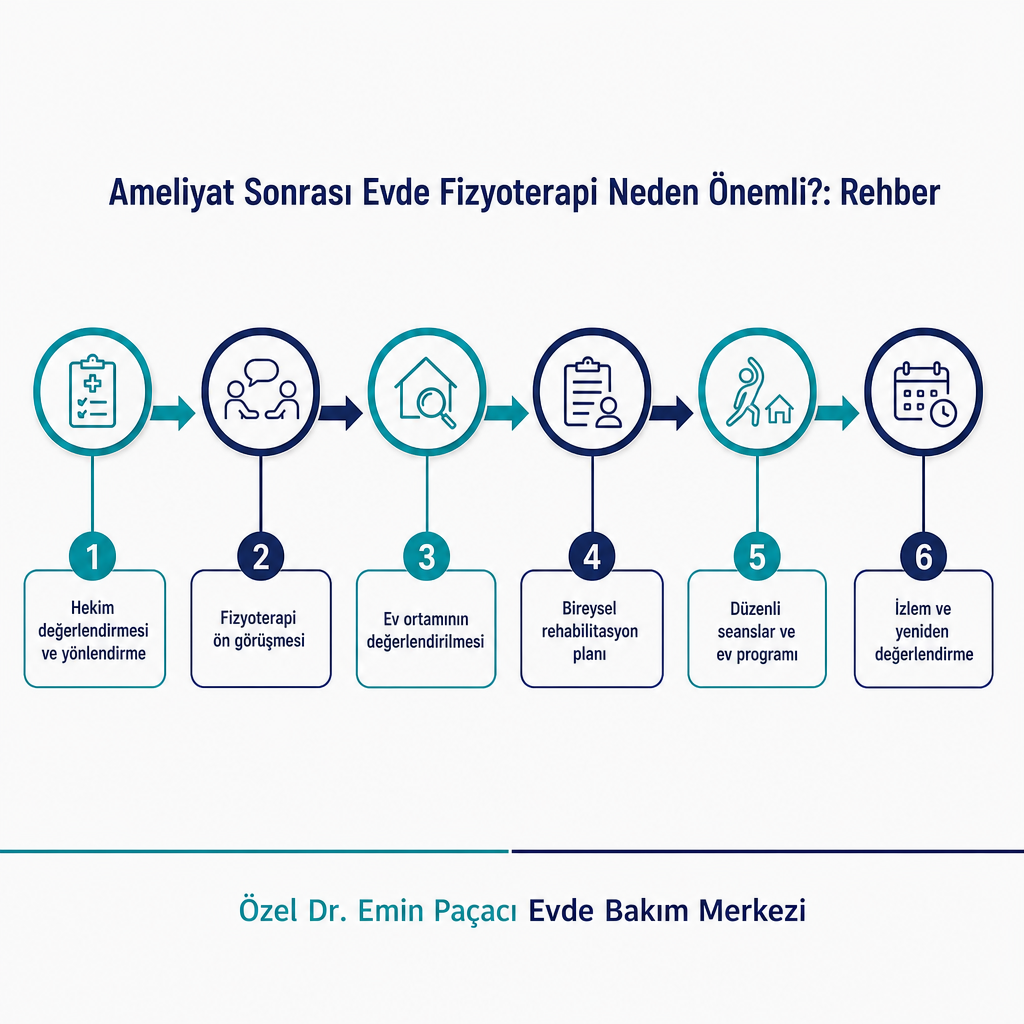 The main stages of the post-surgery home physiotherapy process
What does home physiotherapy aim for?
Post-surgical physiotherapy targets not only the surgical site but the patient's holistic functional condition. The goal is to contribute to the person's safe return to their movement and independence in daily living. Within this framework, the prominent goals are as follows:
- Preserving or regaining range of motion; reducing the development of joint stiffness and contractures.
- Increasing muscle strength, limiting muscle loss (atrophy), and helping to reduce the risk of re-injury.
- Supporting the reduction of the risk of complications that may occur after surgery, such as deep vein thrombosis, pulmonary embolism, and joint stiffness.
- Managing pain and swelling; supporting circulation and tissue healing.
- Improving balance and coordination; restoring transfer skills such as walking, getting out of bed, and sitting in a chair in a structured manner.
- Enabling the patient to practice functional movements in their own home environment under real conditions.
These goals are individualized by the physiotherapist according to the type of surgery (orthopedic, cardiac, neurological, etc.), the patient's age, and accompanying chronic diseases. In other words, the same exercise list does not apply to everyone; the program is adapted according to the clinical condition.
What does the scientific evidence say?
Studies on post-surgical rehabilitation show that regular movement and an appropriate exercise program play a decisive role in functional recovery. The common message of published data is that the program itself and its regular continuation are more important than where the application takes place.
A review examining physiotherapy after hip fracture stated that home physiotherapy provided better patient-reported quality of life compared to receiving no physiotherapy at all; and when compared with outpatient physiotherapy, many outcomes were similar. Studies conducted after lower back and knee region surgeries also emphasized that there was no significant difference in functional outcomes between clinic-based and home-based programs; and in some groups, a home-program-based approach may be associated with greater improvement in pain and quality of life.
In contrast, there are also findings showing that long-term supervised rehabilitation provides no additional benefit in terms of pain and disability for some surgeries. These studies indicate that in some cases, guidance given to the patient toward staying active and maintaining physical activity may be as effective as a structured program.
Taken together, this evidence does not say that a single model is right for everyone. The choice among clinic, home, or outpatient center options should be adapted to the type of surgery, the patient's clinical condition, home conditions, and the physician's assessment.
Duration, timing, and cost framework
How long the process will take is one of the most frequently asked topics. Initial mobilization can begin within the first 24–72 hours after surgery in many surgeries if the physician deems it appropriate; the process is then continued with programs carried out at home or in the clinic. The total duration may extend from a few weeks to a few months for most patients; rehabilitation may take longer with large joint prostheses or complex neurological surgeries.
The number of sessions and the process load vary according to the type of surgery, the session frequency the patient needs, additional services such as home nursing or physician follow-up, and the practices of the affiliated healthcare institution. Therefore, a realistic time and process assessment should be made together with the surgeon and physiotherapist, starting from the patient's own clinical condition rather than a general picture.
In Turkey, home healthcare centers and physiotherapy teams licensed by the Ministry of Health can provide rehabilitation support to patients in the home environment when the physician deems it appropriate. As an institution operating in Üsküdar with a team of licensed physicians, nurses, and physiotherapists, we plan the home physiotherapy process in accordance with physician guidance.
Assessment checklist for prerequisites
Before home physiotherapy is planned, certain topics need to be assessed by the physician and physiotherapist in terms of medical safety and suitability. The following list summarizes the main topics reviewed for the safe and sustainable execution of the process:
- Medical stability: Basic parameters such as blood pressure, pulse, respiration, and oxygen saturation being stable; the absence of significant infection, uncontrolled pain, or signs of active bleeding.
- Characteristics of the surgery: In prosthetic, spinal, cardiac, or thoracic surgeries, the movement limits and weight-bearing protocols being clarified by the surgeon.
- Wound and suture condition: The wound condition, drains, bandages, and any elevation needs being assessed by the nurse and physician.
- Home environment: Identifying environmental risks such as slippery rugs, narrow passages, and inadequate lighting that create a fall risk; ensuring that access to the toilet, bathroom, and stairs can be made safe.
- Social support: The presence of a family member or caregiver to accompany the patient at home, and the ability to reach a healthcare institution in an emergency.
- Communication and follow-up: Ensuring information sharing among the surgeon, physiotherapist, and, when necessary, the home nursing team, and making an appointment plan for check-ups.
For some of these topics, not only physiotherapy but also home private nursing support may be needed; for example, situations requiring wound monitoring and dressing are evaluated within this scope.
The home physiotherapy process: step by step
Home physiotherapy is generally planned in the following order; the details may vary for each patient.
- Medical assessment and referral. The surgeon or relevant specialist physician assesses the post-surgical clinical condition, reviews complication risks, and determines the time to begin physiotherapy.
- Physiotherapy preliminary interview. The physiotherapist obtains information about the surgical report, the surgical technique or prosthesis used, accompanying diseases, and the patient's daily living goals. Through physical examination, they assess range of motion, muscle strength, and balance.
- Assessment of the home environment. During the first visit, the physiotherapist reviews walking paths, sitting-lying areas, and toilet-bathroom access; they recommend simple arrangements to reduce fall risk (such as removing slippery rugs and identifying support points).
- Individualized plan. Concrete goals are set, such as walking with assistance, independently going up and down stairs, or needing less assistance in self-care activities such as dressing and bathing. Exercise types, session frequency, and difficulty level are planned based on the movement restrictions and weight-bearing limits set by the physician.
- Regular sessions and home program. The physiotherapist demonstrates exercises specific to the patient, supervises correct form, and teaches a home program that can be safely performed between sessions. Many studies have reported that supporting the applied physiotherapy with a home exercise program can increase functional gains.
- Monitoring and reassessment. At certain intervals, range of motion, muscle strength, walking distance, and daily living activities are reassessed; when necessary, the program is updated or combined with clinic-based sessions.
These steps are shaped by the physician's guidance and the physiotherapist's clinical judgment. It is not recommended for the patient to change the program on their own or add strenuous exercises.
Advantages and limitations
Home physiotherapy has its own distinct advantages. The physiotherapist can teach safe movement strategies on the armchair, bed, stairs, and hallways the patient uses most frequently; environmental arrangements that could lead to falls can be identified and corrected on site. Participating in rehabilitation in a familiar environment can increase motivation and treatment adherence in some patients. In addition, for patients with limited mobility, who are bedridden, or of advanced age, the physical burden brought by frequent clinic visits can be relieved.
On the other hand, home physiotherapy is not the only option for every patient or every surgery. For some types of surgery, clinic programs requiring special devices or equipment may be preferred. The evidence shows that there are similar outcomes between home- and clinic-based programs across many criteria; and that the additional benefit of long-term supervised rehabilitation may remain limited in some surgeries. If the physical conditions of the home environment are not suitable (such as multi-story stairs, narrow passages, inadequate support surfaces), additional arrangements may be needed for safe application.
Therefore, the decision on whether physiotherapy will be applied at home or in the clinic should be considered separately for each patient; it should be made through the joint assessment of the physician and physiotherapist.
Common mistakes and points to watch
Throughout the process, some common mistakes can adversely affect recovery. Knowing these in advance contributes to the safety of both the patient and the family.
- Creating your own program. Arranging exercises based on internet or acquaintances' advice, without consulting the physician or physiotherapist, can place excessive load on the surgical site or increase the risk of complications.
- Pushing despite pain. Performing intense exercise despite severe or newly starting pain can lead to additional damage in muscle and joint structures; pain level and exercise intensity should be assessed professionally.
- Irregularity of sessions. While regularly applied programs yield more consistent results in functional gains, irregular application can lead to prolonged movement restriction and muscle weakness.
- Ignoring fall risks. Rugs, cables, narrow doorways, and inadequate lighting increase fall risk especially in the early period; failure to comply with the physiotherapist's environmental recommendations can set the stage for new injuries.
- Skipping physician check-ups. Routine post-surgical check-ups are important in terms of prosthesis position, wound condition, infection, and thrombosis; it is not appropriate to only continue physiotherapy while skipping surgical check-ups.
- Underestimating symptoms of complications. Sudden shortness of breath, chest pain, severe swelling and pain in the leg, or high fever may be associated with conditions such as deep vein thrombosis, pulmonary embolism, or infection, and require immediate medical evaluation.
Home exercise or supervised physiotherapy?
Many studies emphasize that planning post-surgical rehabilitation in the form of supervised physiotherapy sessions supported by home exercises offers a balanced approach in terms of functional outcomes. In some surgeries, similar outcomes have been reported between clinic- and home-based programs; and it has been stated that in some patients, a home-based approach may be associated with greater improvement in pain and quality of life. In contrast, some research has shown that the additional benefit of long-term supervised programs may be limited compared to self-management directed toward staying active.
In some cases, supervised physiotherapy may become a component that the physician plans more carefully:
- The early period after large joint prostheses (such as knee, hip).
- Spinal surgeries, neurological surgeries, and patients at high risk of balance disorders.
- People of advanced age, with multiple chronic diseases, or with a prior history of falls.
- Situations where the risk of joint movement restriction is high; for example, after total knee arthroplasty, some studies have reported that a home program under physiotherapist supervision reduced revision and manipulation rates.
The decision should be made together with the patient's clinical condition, the scope of the surgery, home conditions, and the physician's assessment. It is recommended to consult with the surgeon, physiotherapist, and family physician for the appropriate model.
Home healthcare context in Üsküdar
As Private Dr. Emin Paçacı Home Care Center, we are a home healthcare institution licensed by the Ministry of Health in Istanbul Üsküdar; with our team of licensed physicians, nurses, and physiotherapists, we provide medical care to patients in their homes. We are structured to be able to carry out services such as physician visits, private nursing, physiotherapy, palliative care, wound care, and IV applications in the home environment; you can review all of our services under a single heading.
For a patient in need of home physiotherapy after surgery, the process generally begins with the physician's clinical assessment. When necessary, through home private physician care follow-up, by planning physiotherapy and nursing support together, we contribute to determining the rehabilitation model appropriate for the patient. Since the details of the process vary from person to person, a personalized assessment framework can be prepared for your situation if you share your needs.
Frequently Asked Questions
When does physiotherapy begin after surgery?
In many surgeries, when the physician deems it appropriate, physiotherapy and mobilization can be started within the first 24–72 hours after surgery. The starting time is determined by the physician's decision according to the type of surgery, the patient's general condition, and complication risks.
Is home physiotherapy suitable for every surgery?
No. For some surgeries, clinic-based programs requiring special devices or equipment may be preferred; in some cases, home and clinic programs can be used together. The appropriate model should be determined through the assessment of the surgeon and physiotherapist.
How are session frequency and total duration determined?
The number and duration of sessions are planned by the physiotherapist according to the type of surgery, the patient's movement restriction, muscle strength, balance status, and accompanying diseases. Scientific publications report that 6–12 week programs are frequently used after knee and hip prostheses, but that the duration varies from person to person.
Which symptoms should be taken seriously during home physiotherapy?
Sudden shortness of breath, chest pain, marked swelling and pain in the leg, high fever, uncontrolled bleeding, or unexpected neurological signs (such as impaired speech, sudden weakness) may be associated with serious complications and require urgent medical evaluation. With these symptoms, the session should be stopped and the physician should be contacted immediately.
How to choose between home physiotherapy and clinic physiotherapy?
Scientific evidence shows that in many types of surgery there is no major difference in functional outcomes between home- and clinic-based programs; and that adherence to the program and regular application are more decisive. Nevertheless, for some surgeries or in at-risk patients, clinic-based programs or hybrid models may be preferred. The final decision should be made through the joint assessment of the surgeon, physiotherapist, and family physician.