In the middle of the night, when your elderly grandmother's blood pressure drops or your father can't get out of bed after surgery, the first question that comes to mind is usually the same: How can we ensure he receives professional medical support in the safe and familiar environment of his home, without having to transport him back to the hospital? Home elderly care services answer exactly this need; they enable a team consisting of a physician, nurse, and physiotherapist to bring care into the patient's own environment. Private Dr. Emin Paçacı Home Care Center, as a licensed healthcare institution based in Üsküdar, was established to bring hospital-standard medical care to the homes of elderly individuals.
In this article, we explain what home elderly care means, who can benefit from this service, how the process works step by step, and the differences between public and private services. Our goal is to make an ostensibly complex topic understandable for families trying to make the right decision for their loved ones.
Table of Contents
What home elderly care is and who it is suitable for
In Turkey, home health services are regulated by the Ministry of Health and are subject to specific standards. In the relevant regulation, home health services are defined as the provision of examination, testing, analysis, treatment, medical care, and rehabilitation in the person's own home and family environment. The aim is to provide these services equally, accessibly, and with high quality throughout the country.
Home care services, on the other hand, are defined as health, care, and follow-up services that meet patients' medical needs—including rehabilitation, physiotherapy, and psychological support—provided by a healthcare team in the patients' living environment, in line with physicians' recommendations. In other words, home elderly care is not merely companionship or household support; it is a holistic health service planned under physician leadership.
So who are these services typically suitable for? The Istanbul Provincial Health Directorate Home Health Services Provincial Coordinatorship exemplifies the groups eligible for public home health services as follows: elderly individuals aged 80 and over, fully dependent or severely dependent chronic patients aged 65 and over in their daily living activities, and patients bound to bed or home. This definition also indicates the typical target audience for private home care.
In practice, home elderly care becomes especially valuable in the following situations: advanced age where reaching the hospital becomes physically difficult, the post-surgery recovery and rehabilitation process, regular monitoring of chronic diseases (such as diabetes, heart failure, hypertension), patients at risk of pressure sores due to being bedridden, and post-fall fracture rehabilitation. In these scenarios, the familiar home environment both reduces the risk of infection and enables the patient to be more at ease psychologically.
Dr. Emin Paçacı Home Care Center's solutions for the elderly
Private Dr. Emin Paçacı Home Care Center conducts home health services under three main headings, and each of these headings corresponds to a different need in elderly care. The center works with a team of expert, licensed physicians, nurses, and physiotherapists with over ten years of experience.
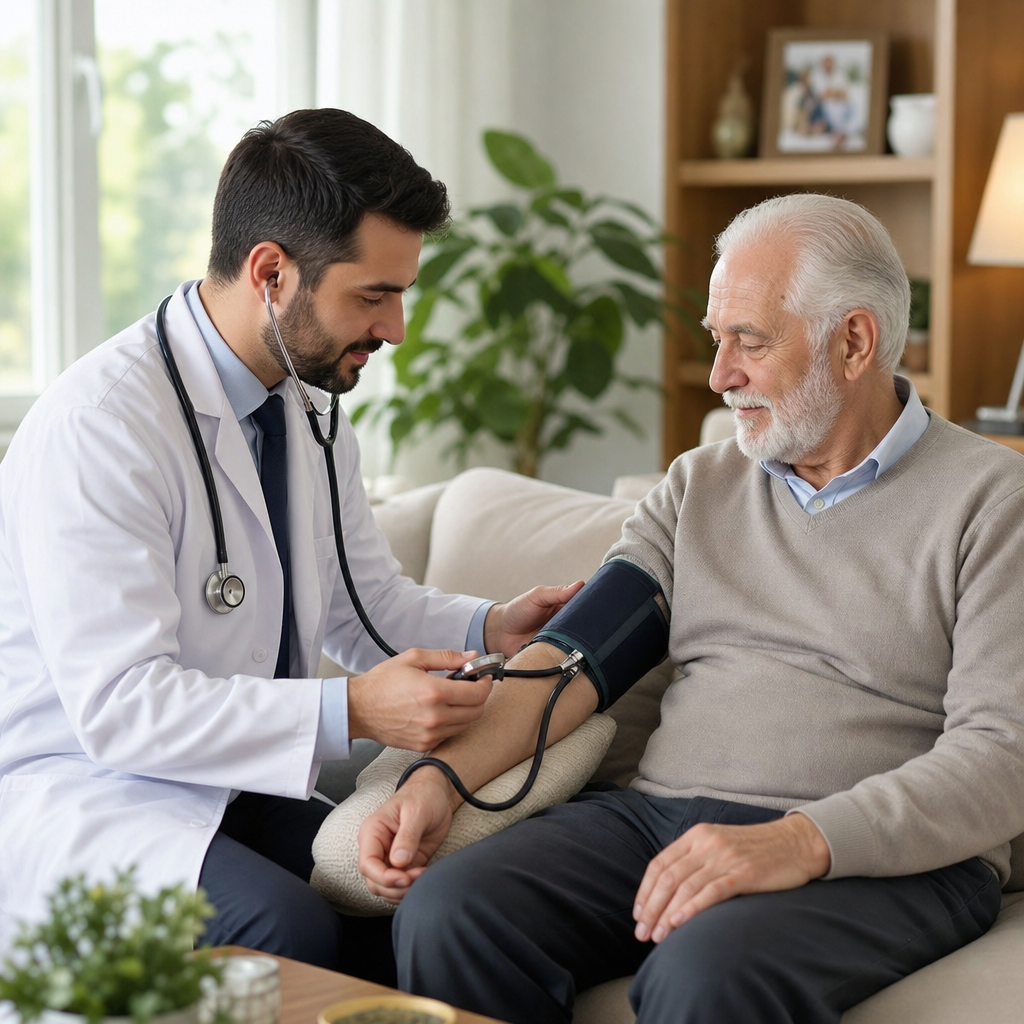
Private home physician services. Home doctor service is not limited to examination alone. As defined by the institution, this service includes diagnosis, creating a treatment plan, regulating medication, care guidance, and, when necessary, planning advanced testing. For an elderly patient, this means a holistic assessment by a physician in the home environment of all chronic diseases, the medications used, functional status, and risks such as falls or pressure sores. In private home physician services, the physician is at the center of the care process and guides the rest of the team.
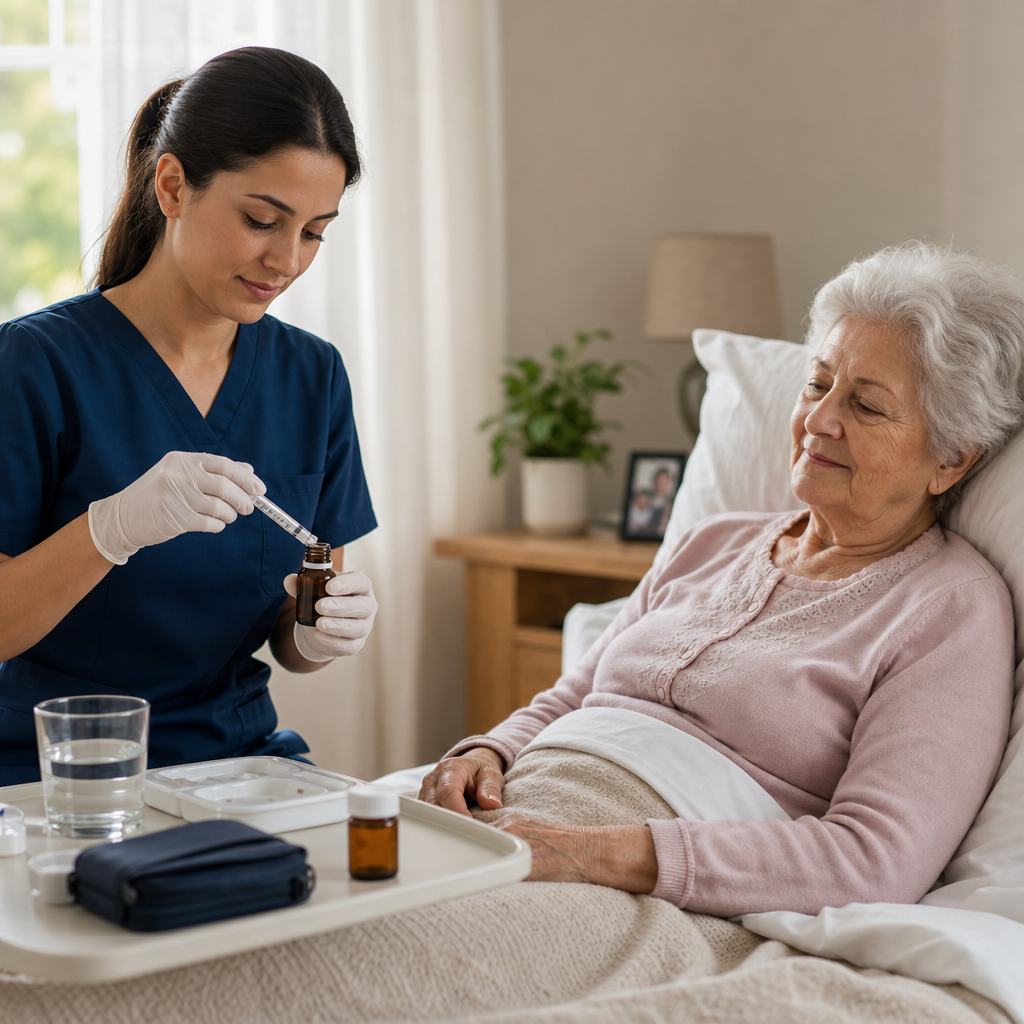
Private home nursing. Following the physician's assessment, regular nurse visits come into play. Procedures such as care of pressure sores commonly seen in the elderly, medication administration and monitoring, serum and injection applications, catheter and probe care are addressed within this scope. The general clinical rationale for home nursing service is also strong: reduced risk of infection compared to the hospital environment, personalized care, high privacy, and preservation of the patient's quality of life. Private home nursing service ensures continuity of care for frail elderly patients.
Home physiotherapy and rehabilitation. For elderly individuals with limited mobility, physiotherapy is one of the most important tools for preserving independence. As emphasized in the center's blog content, home physiotherapy and rehabilitation are offered in the Üsküdar region with the Dr. Emin Paçacı team. Post-fall fracture rehabilitation, mobility restoration work after stroke, and prevention of general muscle strength loss are typical application areas of this service. Home physiotherapy service is carried out with regular sessions in the patient's own home and safe environment.
These three services are not independent of one another; they merge into a single care plan under physician leadership. You can review all of the institution's service headings on the our services page and determine together the most suitable combination for your elderly relative's condition. Additionally, the center also carries out home treatment and follow-up processes; this provides a framework especially for the long-term monitoring of the elderly with chronic illnesses.
Our home elderly care process step by step
Knowing how home care works eliminates the greatest uncertainty for families making a decision. The process generally consists of the following stages.
1. First contact by phone. The process begins with family members contacting the center. Preliminary information about the patient's general condition, age, existing illnesses, and needs is gathered over landline phone lines. You can reach the center 24/7 and convey your first questions.
2. Home physician visit and medical assessment. After the first contact, the physician goes to the patient's home and conducts a comprehensive assessment. At this stage, existing diagnoses are reviewed, the medications used are examined, and the patient's functional status and risks such as falls or pressure sores are evaluated. Advanced tests are planned if deemed necessary.
3. Personalized care plan. The physician's assessment turns into a care plan specific to the patient. This plan includes how frequently nurse visits are required, whether physiotherapy will be included in the plan, and the medication regimen. The regulation also stipulates that home care be planned upon physician recommendation and by the healthcare team.
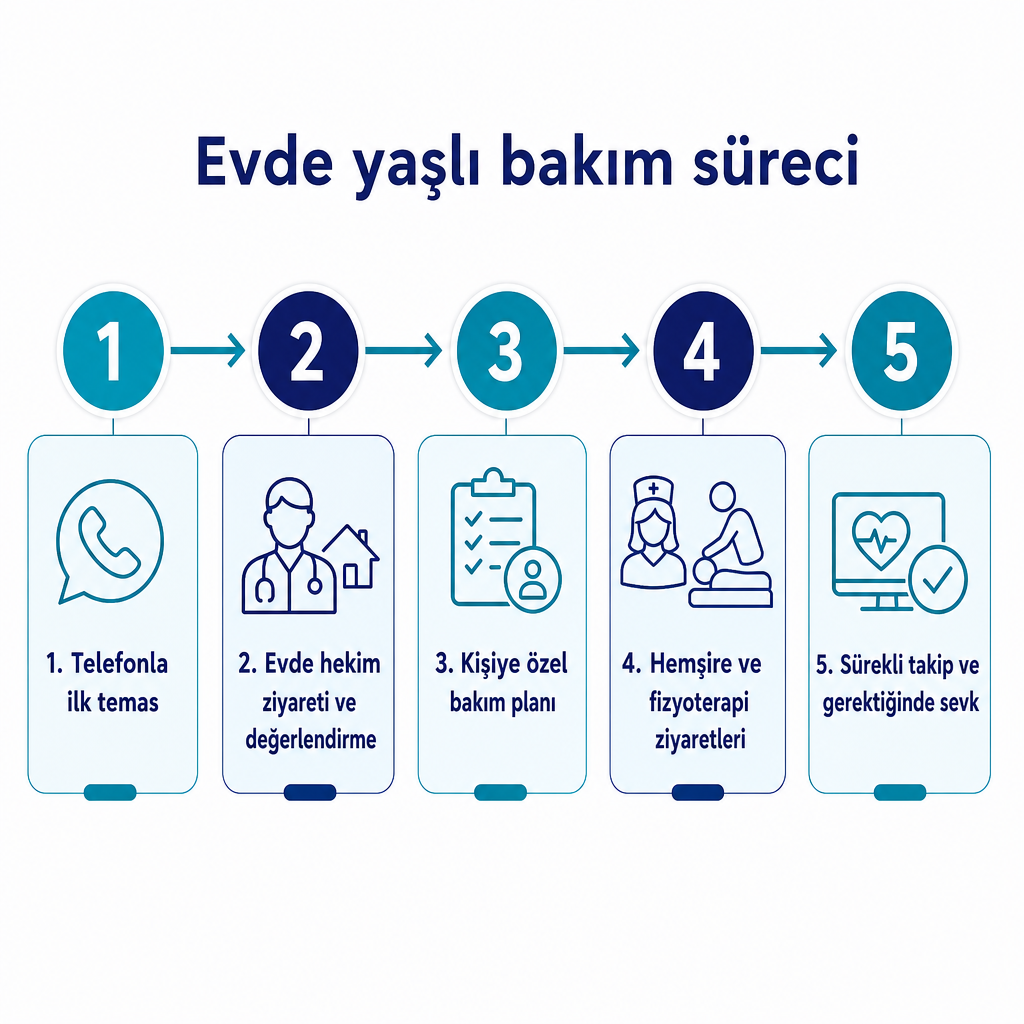
4. Regular nurse and physiotherapy visits. In accordance with the plan, the nurse and, when necessary, the physiotherapist carry out their regular applications in the patient's home. From pressure sore care to injection applications, from rehabilitation exercises to mobility work, the daily burden of care is undertaken by the professional team.
5. Continuous monitoring and referral to hospital when necessary. Care is not a one-time intervention but an ongoing process. The patient's condition is regularly reassessed, and the plan is updated when necessary. When the situation requires advanced testing or intervention under hospital conditions, the team coordinates the referral and transfer process.
Throughout this process, the family's role eases but does not disappear entirely. The team also informs family members and guides them on simple support matters; however, the responsibility for medical procedures remains with the licensed healthcare personnel.
The differences between public home health services and private home care
There are two main paths for home elderly care, and understanding these paths is important for making the right choice.
On the public side, free home health services are provided within the Ministry of Health for patients who meet certain age and dependency criteria. In Istanbul, these services are carried out by the Provincial Coordinatorship, and applications are made through the national call center at 444 38 33. This service is a valuable public right for needs such as basic examination, testing, and prescriptions.
The private home care model, on the other hand, responds to a different need. Licensed private institutions such as Dr. Emin Paçacı Home Care Center can offer more flexible scheduling, personalized plans, and more frequent or intensive services with teams consisting of physicians, nurses, and physiotherapists. The private model stands out especially in situations requiring intensive physiotherapy needs, regular private nursing, or quick accessibility.
For many families, the most practical approach is to use both models together. For example, while benefiting from public services for routine procedures such as medication and reports, private services can be preferred for daily intensive care, frequent physiotherapy, and personalized follow-up. Which combination is right for you depends on your elderly relative's medical condition and the family's daily care capacity.
What to consider when choosing the right home care institution
Home care means entrusting the health of someone you love to a team; therefore, the choice of institution must be made carefully. The concrete criteria that will be useful in your evaluation are as follows.
License and regulatory compliance. The opening and operation of healthcare institutions providing home care services is regulated by a separate regulation. Working with a licensed and audited institution is the assurance that the service is subject to certain standards. Dr. Emin Paçacı Home Care Center operates as an institution licensed by the Ministry of Health.
Multidisciplinary team. Elderly care mostly does not fit into a single area of expertise; a structure in which physicians, nurses, and physiotherapists work together is required. The center's team encompasses these three areas together and coordinates them under physician leadership.
Personalized and ethical approach. Every elderly patient's need is different. The institution's emphasis on ethical, safe, and personalized healthcare demonstrates that care embraces not only the technical but also the human dimension.
Accessibility and proximity. For frail elderly patients, a team reachable day and night provides an important assurance. You can reach the center by phone 24/7. Geographically, the center has also concentrated its home treatment and follow-up services particularly in Üsküdar and its surroundings; this means the possibility of quick and regular visits for residents of the region.
Since details such as which districts are served, visit frequency, and pricing vary according to the patient's condition, it is best to clarify this information by speaking directly with the center.
Frequently asked questions
Who can receive home elderly care?
Generally, individuals of advanced age, patients who are dependent in their daily living activities or bound to bed, the elderly in the post-surgery recovery process, and those with chronic illnesses can benefit from home care. In public home health services, individuals aged 80 and over and severely dependent chronic patients over 65 are counted among the priority groups. Definitive eligibility is determined by physician assessment.
Does a doctor, nurse, or physiotherapist come to the home?
This varies according to the patient's needs. The process generally begins with a comprehensive assessment made by the physician at home. Then, according to the care plan created, the nurse carries out regular applications and the physiotherapist conducts rehabilitation sessions. At Dr. Emin Paçacı Home Care Center, these three specialties are coordinated within a single team, under physician leadership.
For how long and how frequently is the service provided?
Visit frequency and service duration are not standard; they are determined on a personalized basis according to the patient's medical condition and the care plan created by the physician. While visits are more frequent for a patient requiring intensive care, follow-up intervals may be wider for a stable chronic patient. The exact schedule becomes clear after the initial assessment.
Can we use public services and private services together?
Yes, this is the practical approach for many families. While benefiting from public home health services reached via 444 38 33 for routine procedures such as medication and reports, private services can be preferred for frequent physiotherapy, regular private nursing, and personalized intensive follow-up. The combination of the two models is shaped according to the patient's needs and the family's capacity.
How can I reach the center?
You can reach the center by phone 24/7 and receive initial information about your elderly relative's condition. After the first conversation, if deemed appropriate, a home physician assessment is planned, and a personalized care plan is created accordingly.