Elderly care at home refers to the whole set of support services aimed at enabling an elderly individual to maintain their daily life, health monitoring, and safety in their own home. This need sometimes consists only of personal care support; sometimes it also includes medical services such as physician evaluation, nursing monitoring, physiotherapy, wound care, or palliative support. The main criterion determining the scope is not age; it is the person's mobility capacity, chronic illnesses, cognitive status, level of dependence in daily activities, home conditions, and family support. Medical evaluation and treatment decisions, on the other hand, belong to the physician.
In this article, we address as a whole what elderly care at home covers, the distinction between daily life support and medical care, how the need is assessed, and under which symptoms it is necessary to consult a healthcare facility.
Contents
What needs does elderly care at home respond to
As age advances, support may become necessary in daily activities such as bathing, dressing, eating, using the toilet, getting out of bed, and moving around the home. In some individuals, the picture is more extensive: needs such as monitoring chronic illnesses, regular use of medications, managing fall risk, or post-operative follow-up come to the fore.
In practice, elderly care at home may cover the following areas:
- Support in daily life activities
- Monitoring of nutrition and fluid intake
- Personal hygiene and dressing support
- Safe movement and transfer support
- Home arrangements aimed at reducing fall risk
- Tracking of appointments, tests, and health records
- Coordination with physician, nursing, and physiotherapy services
- Regular observation of persons with chronic illness or mobility limitations
The critical distinction here is this: daily life support and medical care are not the same concept. Medical procedures, medication administration, wound care, catheter monitoring, or clinical evaluation fall within the scope of duties of authorized healthcare personnel. A caregiving companion may support daily hygiene and nutrition; however, performing a dressing change or monitoring an intravenous line requires nursing and a physician's plan.
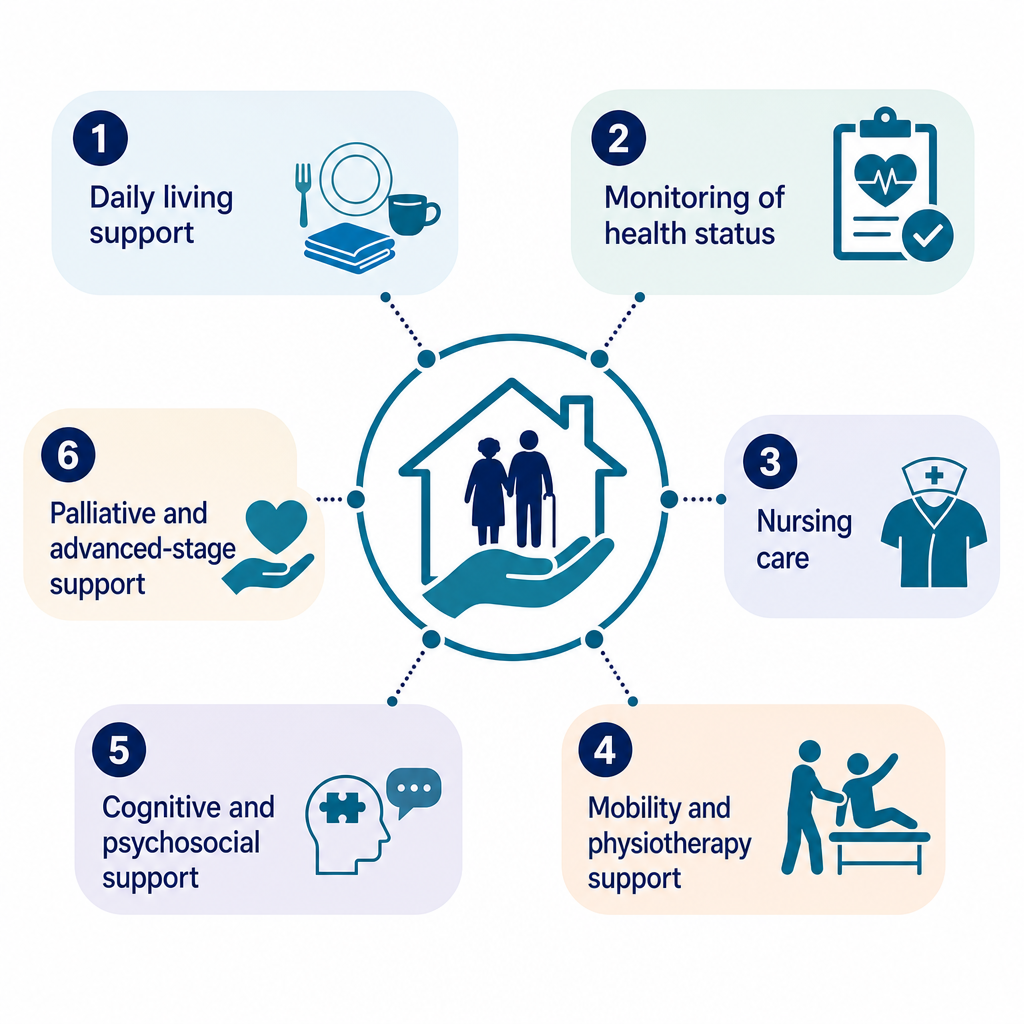 Areas of support in home care for the elderly
Are daily life support and home health service the same thing
Home care may refer to the social and personal supports that help a person maintain their daily life. Dressing, nutrition, personal cleanliness, or safe movement within the home are evaluated within this scope. Home health service, on the other hand, includes medical evaluation, follow-up, care, and rehabilitation services provided by physicians, nurses, physiotherapists, or other healthcare professionals.
In the relevant regulation, home care is defined as the provision of services aimed at medical needs such as health, care, follow-up, rehabilitation, and physiotherapy by the healthcare team in the environment where the patient lives with their family members (Regulation on the Provision of Home Care Services). In Turkey, the services carried out by private healthcare institutions are provided by the healthcare team within the framework of this legislation and in line with physician recommendations.
The two services are often not mutually exclusive. While a bedridden elderly individual needs daily personal care support, they may also need a nurse, physiotherapist, or physician evaluation for pressure sore monitoring, movement assessment, or chronic illness follow-up. For those who want to examine in more detail the distinction between the scope of duties of these two headings, the difference between home health service and home care and what home health service covers are resources that can be consulted.
The basic components of elderly care at home
Elderly care at home is not a single service, but the sum of different components that come together according to need. Not every component is necessary for every individual.
Daily life support
Depending on the level of independence, support may be needed in areas such as changing position in bed, safe transfer between bed and chair, dressing, bathing, using the toilet, eating, and moving safely within the home. A balance is maintained while providing this support: it is important for the person to continue the tasks they can do on their own. Excessive help may, over time, contribute to a decrease in mobility and independence. The level of support is adjusted according to the person's current capacity.
Monitoring of health status
In elderly individuals, more than one chronic illness often coexists. Hypertension, diabetes, cardiovascular diseases, COPD, Parkinson's, dementia, or mobility limitations may require regular follow-up. During monitoring, general condition, changes in consciousness, nutrition, fluid intake, mobility, sleep, fall history, and findings related to existing illnesses are evaluated. How often and how measurements such as blood pressure, pulse, temperature, or respiration are to be taken is determined by a healthcare professional according to the person's clinical condition.
Nursing care
In elderly individuals with a need for medical care, nursing service is carried out in line with the physician's plan. Monitoring of vital signs, wound and dressing follow-up, catheter or feeding tube care, follow-up of procedures prescribed by the physician, evaluation of pressure sore risk, and informing the family about care may come up within this scope. Whether the procedure is necessary and how it is to be performed is evaluated by the physician or authorized healthcare personnel. For details regarding the scope, the home private nursing and home nursing service scope pages can be consulted.
Movement and physiotherapy support
Immobility may contribute to a decrease in muscle strength, restriction in joint range of motion, and balance problems. In a physiotherapy evaluation, the person's muscle strength, balance, walking capacity, joint movements, and difficulties in daily activities are addressed. The content of the application is planned according to the person's illnesses, age, current capacity, and physician-physiotherapist evaluation. If there is pain, newly developing loss of strength, significant shortness of breath, chest pain, or signs of acute illness, medical evaluation is required before starting any movement program. Details are provided on the home physiotherapy page.
Cognitive and psychosocial support
In individuals with dementia or Alzheimer's disease, forgetfulness, disorientation, behavioral changes, and communication difficulties may occur. In care, calm and understandable communication, maintaining the daily routine as much as possible, and creating a safe environment are important. Newly onset significant confusion, speech impairment, one-sided weakness, or unusual behavioral changes should not be explained by dementia alone; a healthcare facility should be consulted to evaluate these findings.
Palliative care and advanced-stage support
Palliative care is a multidisciplinary approach that aims to evaluate pain and other symptoms in individuals with serious or progressive illnesses, support quality of life, address psychosocial needs, and guide the family. It is not specific only to the final period of life; it may also come up as a supportive approach at different stages of the illness. The need is evaluated by the physician in line with the patient's clinical condition, symptom burden, and care goals.
How is the care need assessed
When planning elderly care at home, the diagnosis is not the only thing considered. The care needs of two people carrying the same diagnosis may be entirely different depending on their functional status. For this reason, the assessment addresses multiple headings together.
| Assessment area |
Headings examined |
| Daily life activities |
Bathing, dressing, nutrition, toilet, and movement |
| Medical condition |
Chronic illnesses, past surgeries, current treatments |
| Mobility |
Walking, balance, transfer, and fall history |
| Cognitive status |
Forgetfulness, orientation, communication, and decision-making |
| Nutrition |
Appetite, weight change, swallowing, and fluid consumption |
| Home environment |
Lighting, rugs, stairs, and bathroom safety |
| Care goals |
Preserving independence, safe movement, symptom control |
As a result of this assessment, it becomes clear whether only daily support, regular nursing monitoring, physician evaluation, or team services such as physiotherapy or palliative care are required. The decision is shaped by also taking into account the person's preferences and the scope of family support.
Main points affecting safety in the home environment
In elderly individuals, fall risk increases with balance disorders, muscle weakness, vision problems, unsuitable footwear, inadequate lighting, and obstacles within the home. The points that can be reviewed in a home assessment are as follows:
- Absence of cables and scattered items in passage areas
- Arrangement of slippery floors and loose rugs
- Evaluation of grab support in the bathroom and toilet
- Adequate lighting of stairs and corridors
- The bed being at a height that facilitates getting up and sitting
- Placing frequently used items in easily accessible locations
The suitability of assistive devices such as a cane, walker, or wheelchair for the person, especially in those with balance or musculoskeletal problems, should be determined through a physiotherapist or physician evaluation. A wrongly chosen assistive device may increase the risk it is expected to resolve.
Under which symptoms is medical evaluation required
Symptoms vary from person to person; however, the following findings may indicate a change in the elderly individual's current condition and require evaluation:
- Newly onset or increasing shortness of breath
- Chest pain
- Sudden change in consciousness or fainting
- Sudden weakness in the face, arm, or leg
- Newly developing speech impairment
- Uncontrollable bleeding
- Severe and newly onset pain
- Pain in the head, neck, or hip area after a fall
- Deterioration of general condition accompanied by high fever
- Inability to take food or fluids, significant thirst, or very little urination
In situations suggesting a life-threatening condition, the 112 Emergency Call Center should be called. For milder but newly onset or persistent symptoms, consulting a physician is recommended.
How do public and private home care services differ
In Turkey, public home health services are provided to certain patient groups through units affiliated with the Ministry of Health and relevant healthcare institutions. In Ministry resources, bedridden, semi-dependent, advanced-age persons with mobility limitations, those with dementia or Parkinson's disease, and those requiring post-operative care are among the groups that can be evaluated.
Private home care institutions, on the other hand, are healthcare institutions operating according to the relevant legislation. The type, scope, continuity, and team structure of the service vary according to the institution's license, the healthcare personnel on duty, and the patient's clinical need. The regulation specifies the principle of continuity in home care service; it provides that the service can be delivered at certain hours according to need or, when necessary, during the day and night.
Public service, private health service, and social care support do not have the same purpose and conditions. The channel to which an application is made is determined according to the person's medical need, place of residence, social situation, and the nature of the requested service.
Service headings related to elderly care at our center
As a licensed home care institution in Üsküdar, we provide different service headings that come together according to the needs of the elderly individual. Our services include home private physician care, home private nursing, home physiotherapy, home palliative care, wound care and follow-up, acute and chronic patient follow-up, post-operative follow-up, as well as nurse accompaniment and transfer support.
Each of these services is not necessary for every elderly individual. The appropriate type of service is determined on the basis of health status, care need, home conditions, and physician evaluation. You can examine how the evaluation and follow-up process on the physician side works on the home private physician care page; to determine which components fit an individual's need, we can evaluate the situation together.
Frequently Asked Questions
Is elderly care at home only for bedridden people?
No. Being bedridden may increase the need for care; however, home care may also come up for people who have difficulty walking, are at risk of falling, need chronic illness follow-up, or require partial support in daily activities.
Are elderly care at home and patient caregiving the same thing?
No. A patient caregiver or companion can provide daily life support. Nursing and other medical services, on the other hand, fall within the scope of duties of authorized healthcare personnel. According to need, daily care support and health services can be planned together.
Can the family administer medication in home care?
Starting, stopping, changing the dose, or determining the method of administration of medications requires a physician's decision. Administration and follow-up should be carried out according to the person's clinical condition and the scope of duties of healthcare personnel.
How long does elderly care at home last?
The duration varies according to the person's level of independence, health status, daily care need, and family support. While support at certain hours may be sufficient for some people, more frequent nursing or companion support may be needed for others.
How is the home care decision made?
The decision is made by evaluating together the elderly individual's daily life activities, illnesses, mobility, cognitive status, home safety, and family support. In situations requiring medical follow-up or procedures, physician evaluation is essential.