The effects of a sedentary (inactive) lifestyle on the musculoskeletal system in older adults represent a process that often progresses unnoticed yet can significantly affect daily life. Prolonged sitting or lying down is associated with outcomes such as decreased muscle strength, joint stiffness, and impaired balance. While some of these changes are a natural part of aging, when inactivity is added to this process, the effects may appear earlier and more prominently. Understanding this process in the home setting, planning a safe approach with the guidance of a physician and physiotherapist, and regularly monitoring gains usually follows a path that begins within weeks; the goal is not a cure completed in a short time, but a sustainable movement routine appropriate to the person's health condition.
Table of contents
The difference between a sedentary lifestyle and physical inactivity
Sedentary behavior refers to time spent in a sitting or lying position with very low energy expenditure during waking hours. Watching television, using a phone or computer for long periods, and sitting motionless on a sofa are examples of this behavior. This definition requires distinguishing between two frequently confused concepts: even if a person exercises on certain days of the week, they may still be living a sedentary life if they spend most of the day sitting.
Physical inactivity describes falling below the level of movement recommended for health, whereas sedentary behavior relates to the sitting time itself. This distinction is important in practice, because even if short walks are added, the risk may persist if long uninterrupted blocks of sitting continue. It has been reported that prolonged sedentary behavior in older adults can have independent adverse effects on the musculoskeletal system and overall functional capacity.
The natural effect of aging on muscle and bone
Muscle mass and strength naturally decline with advancing age. It has been reported that this decline can reach approximately 15% per decade especially after the age of 50, and approximately 30% per decade after the age of 70. This picture of low muscle mass and strength is called sarcopenia in the literature, while the decrease in muscle strength is called dynapenia.
With aging, marked atrophy is seen especially in Type II (fast-twitch) muscle fibers. The decrease in these fibers reduces not only muscle strength but also the capacity to produce sudden and rapid force (power); this is a factor that can increase the risk of falls. Bone mineral density, after reaching its peak in adulthood, tends to decrease slowly over the years, and this decline can accelerate with advanced age and in the postmenopausal period. When these natural changes combine with inactivity, the adverse effects on the musculoskeletal system can become more pronounced.
The effects of inactivity on muscles
It has been reported that in older adults with high levels of sedentary behavior, the risk of muscle mass loss and sarcopenia increases significantly. It has been shown that in community-dwelling older adults, each additional 1 hour of sitting time can increase the risk of sarcopenia by approximately 30%. Prolonged inactivity leads to atrophy in muscle fibers and a decrease in muscle volume; this can result in loss of muscle strength, increased fatigue, and reduced capacity to perform daily activities. In advanced age, the weakened response of muscle tissue to nutrition and exercise (anabolic resistance), when combined with a sedentary lifestyle, can accelerate the loss process.
The fastest change is seen in cases of prolonged bed rest or severe restriction of movement. Rapid muscle mass loss beginning within a few days has been described; in individuals on bed rest in the hospital or at home, marked strength loss, balance impairment, and reduced joint range of motion can occur, especially in the thigh and leg muscles. This deconditioning makes the process of standing up again and walking safely more difficult. In older adults receiving care at home and with markedly reduced mobility, it is important to recognize this process early through evaluation by a physician and physiotherapist.
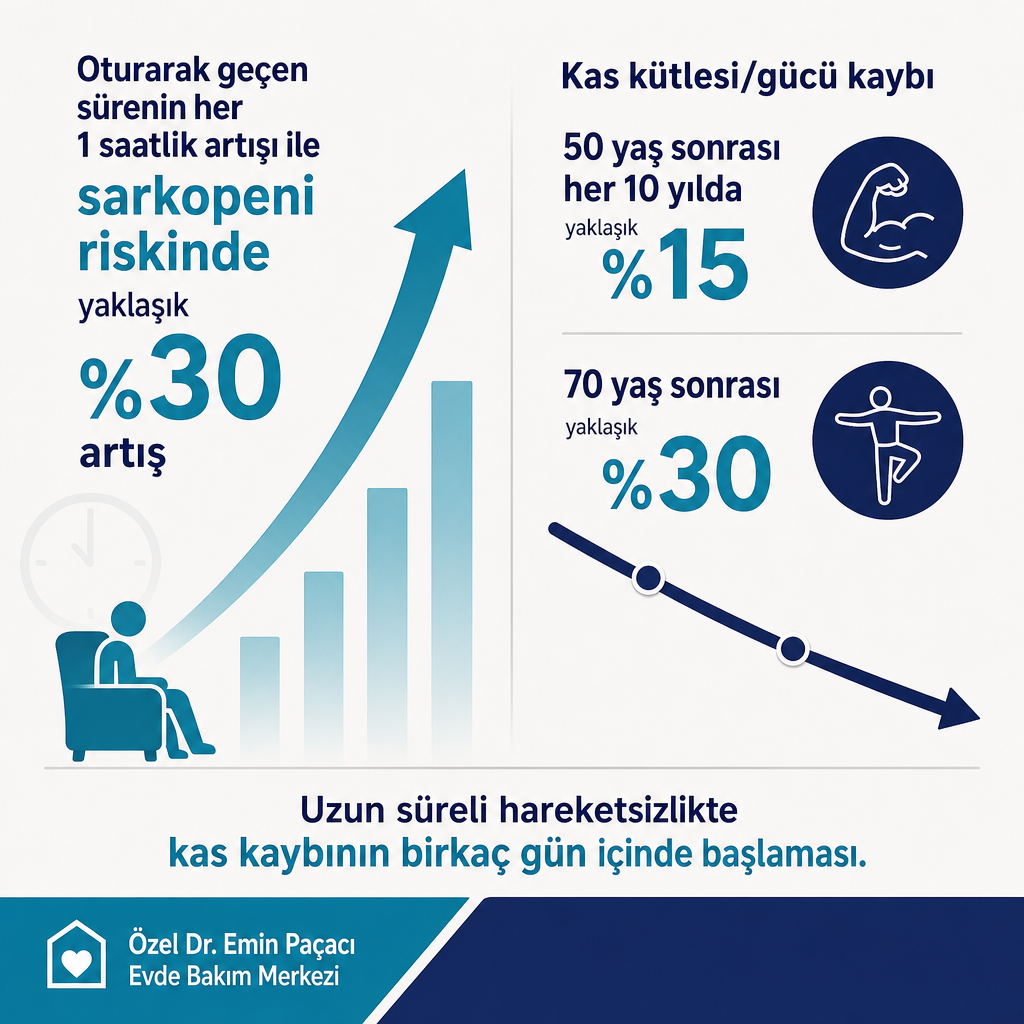 The relationship between sitting time and muscle loss
Effects on bones, joints, and tendons
Inactivity does not affect only the muscles. A sedentary lifestyle and physical inactivity can contribute to a decrease in bone mineral density by reducing the mechanical load applied to bones. The condition in which low muscle mass and low bone density occur together is defined as osteo-sarcopenia and is associated with an increase in fracture risk and complications following falls. It is noted that in older adults with a very low level of activity who sit or lie down for long periods, bone density loss and the associated fracture risk may increase.
Joints and soft tissues are also affected by this process. When the muscle-tendon unit is not sufficiently loaded, a decrease in muscle volume and changes in tendon properties may be seen. In joints that remain immobile for long periods, stiffening can develop in the capsule and surrounding connective tissues, narrowing the joint range of motion. In addition, prolonged sitting or lying with poor posture can increase the frequency of musculoskeletal pain and orthopedic problems in areas such as the lower back, neck, shoulder, and knee. Causal relationships have been shown between sedentary behavior and various musculoskeletal conditions such as lower back pain and shoulder girdle and knee-area problems.
Functional outcomes such as balance, falls, and pain
The sum of these changes manifests in daily life as functional losses. When loss of muscle strength, joint stiffness, and a decrease in walking speed come together, balance is impaired and the risk of falling increases. When sarcopenia and a sedentary lifestyle are evaluated together, it has been reported that the risk of falls and fall-related fractures increases significantly.
Pain is also an inseparable part of this picture. The decrease in muscle mass and strength is closely related to chronic musculoskeletal pain; pain-related restriction of movement is more common in older adults with low levels of physical activity. This can create a vicious cycle: pain reduces movement, reduced movement accelerates muscle and bone losses, and these losses in turn increase pain and the risk of falls. For this reason, it is recommended that the effects of the inactivity process on the musculoskeletal system and daily living activities be evaluated at regular intervals in older adults living at home or receiving home care services.
Before starting: prerequisites assessed by the physician
If a plan to reduce a sedentary lifestyle at home is being considered for an older adult, it is important for the following items to be assessed by a physician for a safe start. This list shows what information is needed before making a plan:
- Existing chronic conditions (heart, lung, neurological diseases, osteoporosis, rheumatological diseases).
- History of falls, fracture history, and balance problems.
- Ongoing musculoskeletal pain (lower back, knee, hip, shoulder, etc.) and the severity of the pain.
- Medications used and their possible side effects (e.g., dizziness, low blood pressure).
- Cognitive status (forgetfulness, disorientation) and communication skills.
- Physical safety of the home environment (slippery floors, rugs, stairs, lighting).
- Level of independence in daily living activities (dressing, bathing, toileting, kitchen tasks).
After this assessment, the physician and, where necessary, the physiotherapist can set safe movement goals appropriate to the individual's medical condition. You can find the general framework of how the home care process works and how roles are shared in our article explaining how home care service works in Istanbul.
Step by step: an approach to increasing activity level at home
The approach to reducing sedentary time is not a one-time application but a process that begins with assessment and continues with monitoring. The following sequence shows the general flow of this process in the context of home care.
Step 1: Medical assessment and setting goals
The physician first evaluates the musculoskeletal system, cardiovascular and respiratory systems, neurological status, and overall functional capacity. After this assessment, short- and medium-term goals appropriate to the individual can be set; for example, reducing daily sitting time or gradually increasing the safe walking distance. Within the scope of our home private physician service, this assessment can be carried out in the individual's own environment.
Step 2: Functional assessment by the physiotherapist
The physiotherapist evaluates parameters such as muscle strength, joint range of motion, balance, walking speed, and endurance with objective tests. A personalized movement outline is created taking into account sedentary time, daily routine, and areas of pain. This plan is arranged in a way that is compatible with the physical characteristics of the home and the individual's safety condition. You can see in detail how the process is carried out in the home setting on our home physiotherapy service page.
Step 3: Reducing sedentary time in the daily routine
It has been shown that breaking up sedentary time into short intervals rather than uninterrupted long blocks is more favorable in terms of muscle volume and function. In line with the recommendations of the physician and physiotherapist, the individual can change position at regular intervals throughout the day and perform short-duration movements that they can tolerate.
Step 4: Making the home environment safe
Because the risk of falling can be affected as the activity level changes, it is important to review the physical safety of the home. Adequate lighting, reducing slippery floors, arranging rugs and cables in a way that does not create a tripping hazard, and using grab bars where deemed necessary can support the safe maintenance of gains.
Step 5: Regular monitoring and reassessment
The effect of interventions aimed at reducing a sedentary lifestyle can be noticed within a few weeks in the form of slight improvements in daily activities; changes in muscle strength and endurance, however, mostly appear over weeks to months. The physician and physiotherapist can adjust the plan by reassessing the musculoskeletal findings, pain level, and falls/injuries at certain intervals.
Common mistakes and troubleshooting
Well-intentioned efforts may not provide the expected benefit when applied with wrong timing or wrong intensity. The most frequently encountered problems are as follows:
Starting with sudden, high-intensity exercise. Sudden, high-intensity exercise attempts in an inactive older adult can increase the risk of musculoskeletal injuries and cardiovascular events. The increase in activity level should be gradual, and the intensity should be determined by the physician and physiotherapist.
Underestimating sedentary time. Sitting for long periods in front of the television, phone, or computer is often perceived as "resting"; this leads to sedentary time being underestimated. Systematically recording the time spent sitting can make the true extent of the behavior visible.
Ignoring pain and fatigue. Musculoskeletal pain and excessive fatigue may indicate an underlying joint disease, muscle-tendon problems, or an inappropriate activity level. To ensure that the planned amount of movement does not exceed the individual's pain and fatigue limits, it is important to obtain regular feedback and, when necessary, to have an evaluation with the physician.
Viewing prolonged bed rest as "mandatory rest." Prolonged bed rest accelerates muscle mass loss; it can pave the way for complications such as joint stiffness, balance impairment, and pressure sores. Even during mandatory bed rest, establishing a plan for position changes and limited movement to the extent deemed appropriate by the physician and physiotherapist is important for the musculoskeletal system.
What can be done at home and situations requiring professional support
In the approach to reducing a sedentary lifestyle, the critical point is being able to distinguish which situations can progress with simple in-home arrangements and which require professional assessment.
Situations that can progress with simple arrangements include individuals who are largely independent in daily living activities, can walk short distances without assistance, have no significant history of falls, and have mild pain. In this group, after physician assessment, simple movement breaks and posture adjustments aimed at reducing sedentary time can be planned with the guidance of a physiotherapist.
Risky situations requiring professional support, on the other hand, should be handled carefully:
- Individuals with a history of one or more recent falls, who have had a fracture, or who experience a significant balance problem.
- Older adults who have been bedridden for a long time and have developed marked loss of muscle strength and joint contractures.
- Individuals with severe lower back, hip, knee, or shoulder pain, or whose musculoskeletal pain significantly restricts daily life.
- Those with advanced cardiopulmonary disease, severe neurological disease, or cognitive impairment.
In these situations, the musculoskeletal system and overall health status should be comprehensively evaluated by a physician; the physiotherapist and nurse can contribute to the home care process in terms of movement and safety. You can review the scope of nursing support on our home private nursing service page. The decision on assessment and treatment rests with the physician according to each individual's clinical condition.
Frequently asked questions
What is the difference between a sedentary lifestyle and physical inactivity?
A sedentary lifestyle refers to periods of very low energy expenditure in a sitting or lying position; physical inactivity, on the other hand, describes falling below the level of movement recommended for health. Even if a person exercises at certain intervals, they may still be living a sedentary life if they spend most of the day sitting.
How soon does muscle loss begin in an older adult who remains inactive?
It has been shown that in prolonged inactivity, muscle mass loss can begin within a few days and marked loss of muscle strength can appear in a short time. This deconditioning, which develops within days to weeks, can lead to functional loss especially in the leg muscles.
Are short walks alone sufficient to reduce the effects of a sedentary lifestyle?
Short walks can be beneficial for the musculoskeletal system; however, adding only walking without reducing prolonged sitting or lying behavior may not completely eliminate the adverse effects of a sedentary lifestyle. It is important to break up sedentary time with short movement breaks distributed throughout the day and to increase the activity level in a way appropriate to the individual's health condition.
Can reducing a sedentary lifestyle be harmful in an older adult with musculoskeletal pain?
Pain may indicate an underlying joint, muscle, or tendon problem; an inappropriate or uncontrolled increase in movement can increase pain. For this reason, it is recommended that the plan to reduce sedentary time in older adults with significant musculoskeletal pain be evaluated by a physician and physiotherapist.
What is the effect of a sedentary lifestyle on the risk of falls and fractures?
A sedentary lifestyle and sarcopenia together can increase the risk of falls and fractures through loss of muscle strength and impaired balance. When bone density loss and muscle mass decline come together, osteo-sarcopenia can develop; this condition can raise the likelihood of a fracture following a fall.